Breast Ultrasound Tumor Segmentation and Classification Using Deep Learning and Ensemble Learning
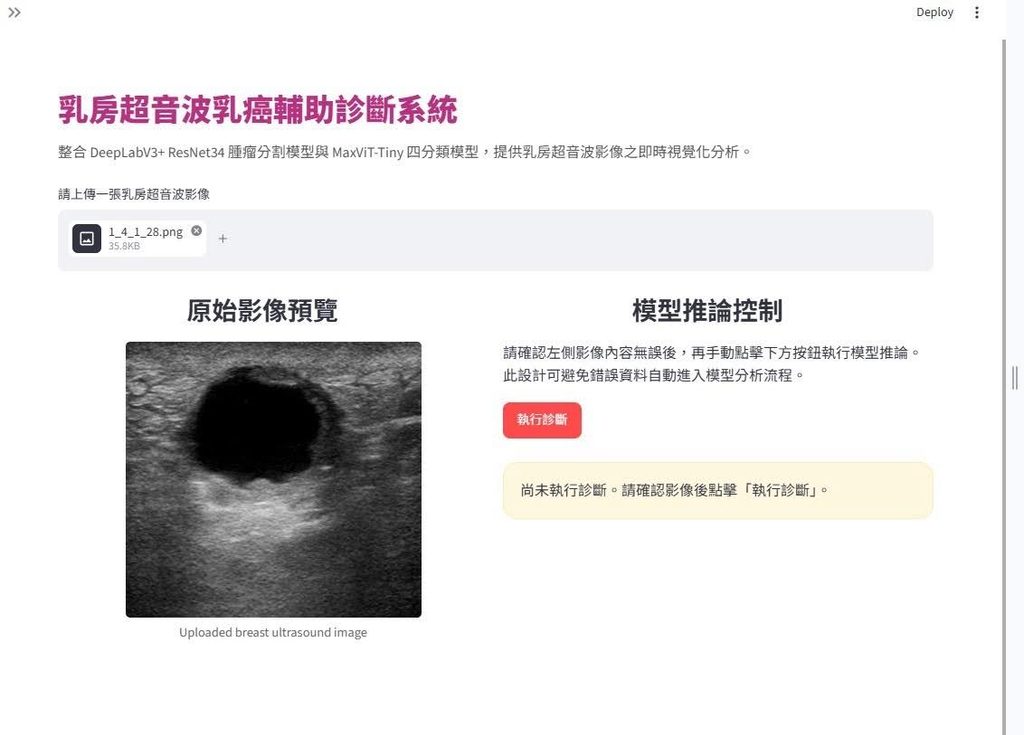
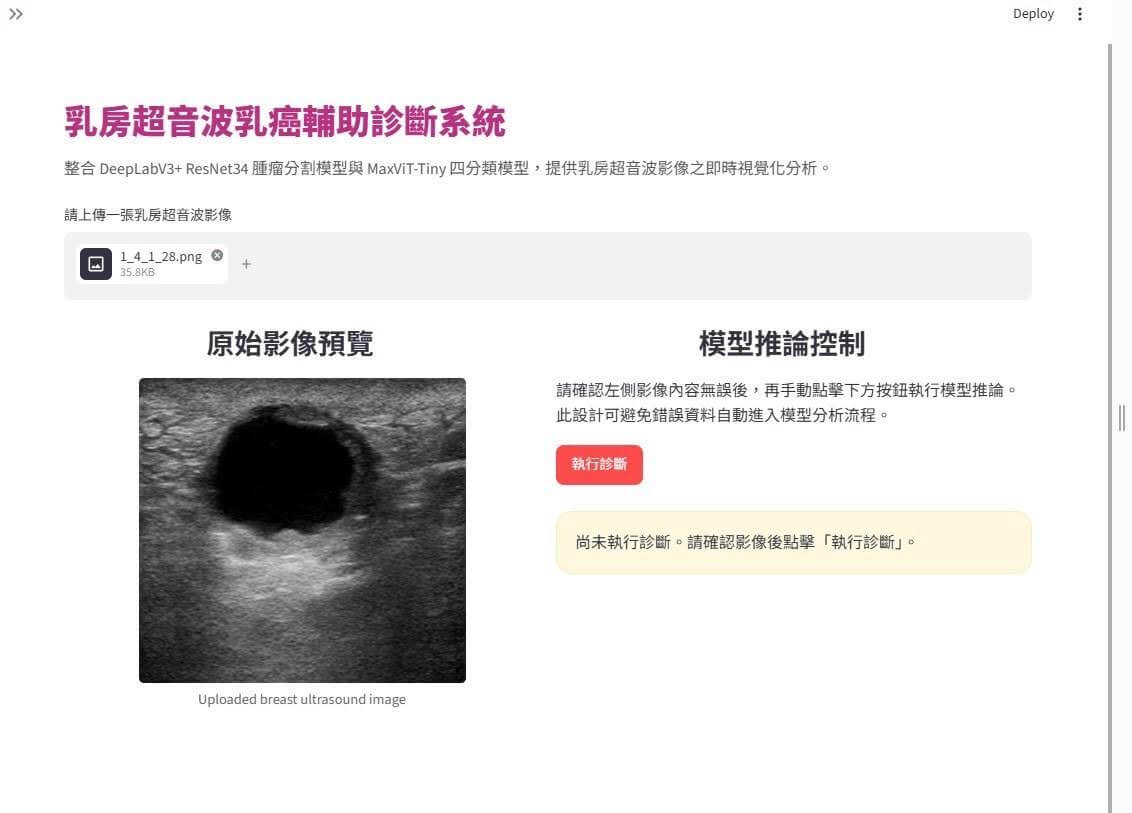
Breast cancer diagnosis using ultrasound imaging is an important task in medical image analysis, particularly for identifying and assessing suspicious breast lesions. This study focuses on integrating deep learning-based tumor segmentation and image classification techniques to develop an automated computer-aided analysis framework for breast ultrasound images. Multiple segmentation models, including DeepLabV3+, Swin-UNet, Mask R-CNN, YOLOv8, and YOLOv11, are investigated to accurately identify and delineate breast tumor regions. In addition, various deep learning architectures, including convolutional neural networks (CNNs), Transformer-based models, and hybrid architectures, are evaluated for classifying breast ultrasound images into four categories: Benign, Stage I, Stage II, and Stage III, representing different levels of suspected malignancy.
To improve model robustness and classification performance, data augmentation and ensemble learning strategies are incorporated into the proposed framework. Multiple ensemble approaches are evaluated by combining the predictive outputs of individual classification models, while test-time augmentation (TTA) is further applied to enhance prediction stability. The dataset consists of annotated breast ultrasound images with corresponding tumor masks and risk-category labels. Model performance is evaluated using multiple metrics, including Precision, Recall, Dice Similarity Coefficient (DSC), Intersection over Union (IoU), Accuracy, F1-score, and Area Under the Receiver Operating Characteristic Curve (AUC).
Experimental results demonstrate that DeepLabV3+ with a ResNet34 backbone achieves the best overall segmentation performance, effectively delineating tumor regions in breast ultrasound images. For image classification, ensemble learning further improves the robustness of predictions by integrating complementary information from multiple deep learning models. Grad-CAM (Gradient-weighted Class Activation Mapping) is also employed to visualize image regions associated with classification decisions, providing additional interpretability for the deep learning analysis.
By integrating tumor segmentation, multi-class image classification, ensemble learning, and explainable visualization into a unified framework, this research aims to provide an efficient and automated approach for breast ultrasound image analysis. The proposed system may serve as a computer-aided diagnostic tool to assist clinicians in tumor localization and malignancy risk assessment, while providing a foundation for the future development of intelligent breast ultrasound diagnostic systems.