Explainable Multimodal AI for Early Dyslipidemia Identification Using SNPs and Non-Invasive Health Data
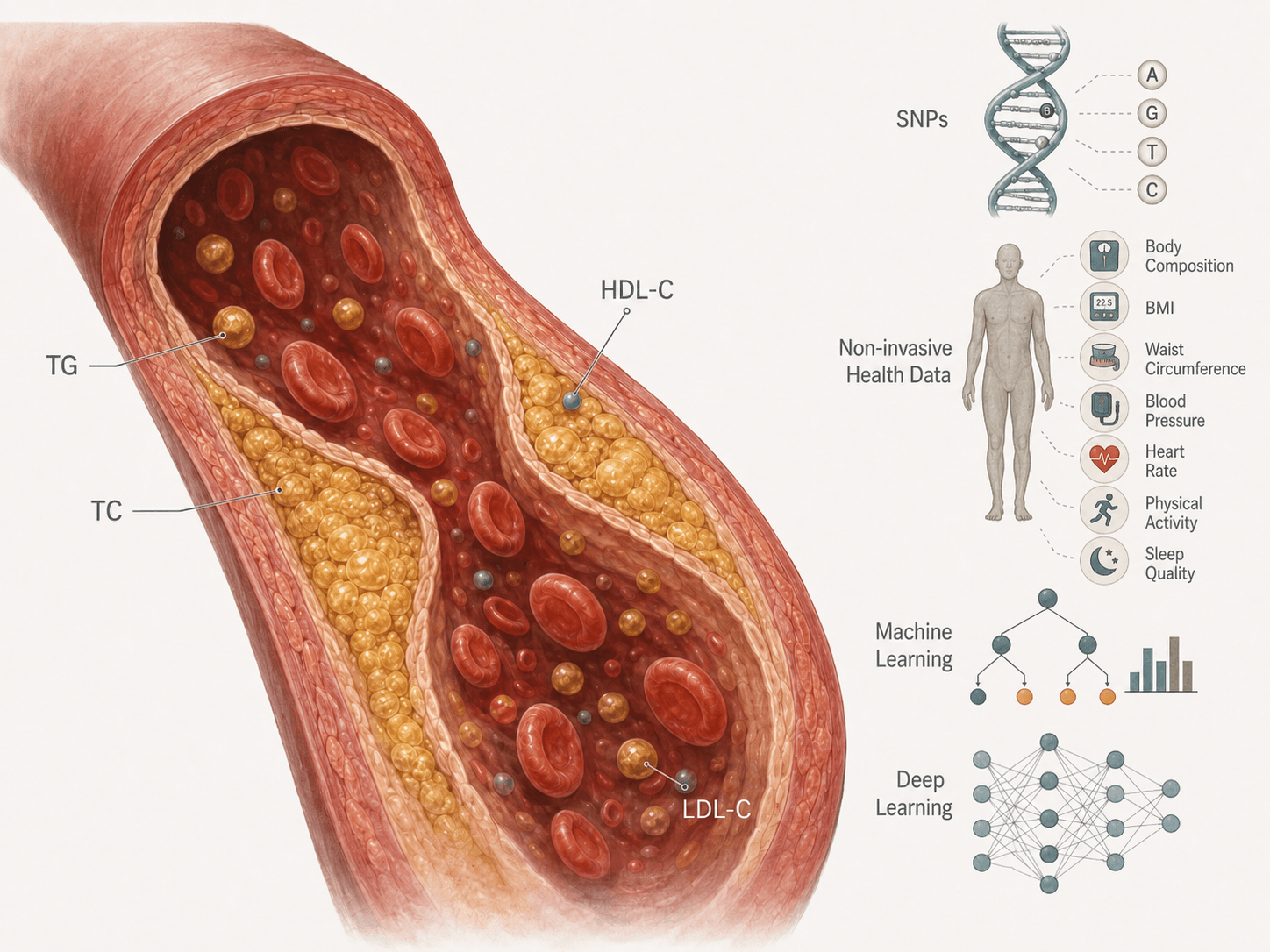
Dyslipidemia is a common lipid disorder characterized by abnormal levels of triglycerides, total cholesterol, high-density lipoprotein cholesterol (HDL-C), or low-density lipoprotein cholesterol (LDL-C). It is an important risk factor for cardiovascular and metabolic diseases, but it often develops without noticeable symptoms and is usually identified through blood testing. As a result, dyslipidemia may remain undetected in individuals who do not undergo regular health examinations.
This study investigates whether dyslipidemia risk can be identified earlier using information that is available before blood testing. Data from the Taiwan Biobank were used to integrate non-invasive health information, including demographic characteristics, lifestyle factors, body measurements, body composition, and physiological indicators, together with single nucleotide polymorphism (SNP) data that reflect inherited genetic differences. Multiple machine learning and deep learning models, along with different multimodal fusion strategies, were evaluated to determine how these two types of information can be effectively combined.
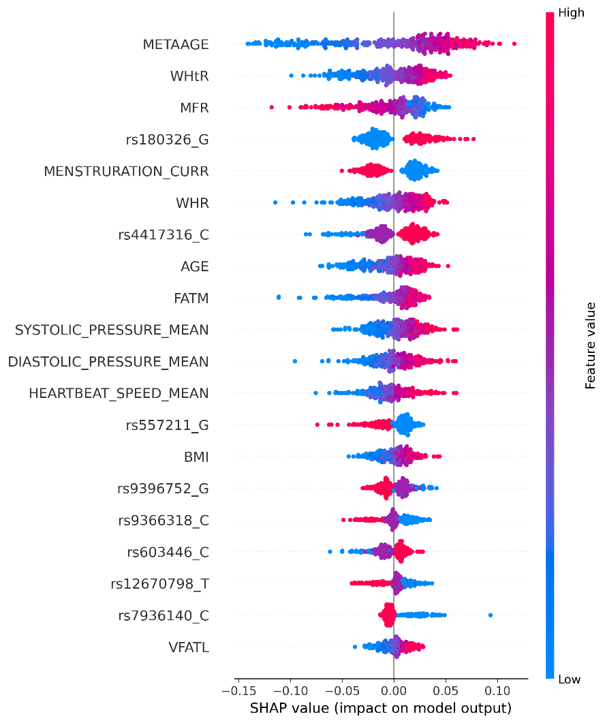
The results showed that non-invasive health data and SNP information provide complementary predictive value, and that integrating both modalities offers a more comprehensive basis for risk identification than using either source alone. Explainable AI was further applied to reveal the important health characteristics and genetic variants contributing to model predictions. Overall, this study supports the feasibility of combining non-invasive health data and SNPs for early, pre-screening identification of dyslipidemia risk and provides a potential foundation for personalized health management.